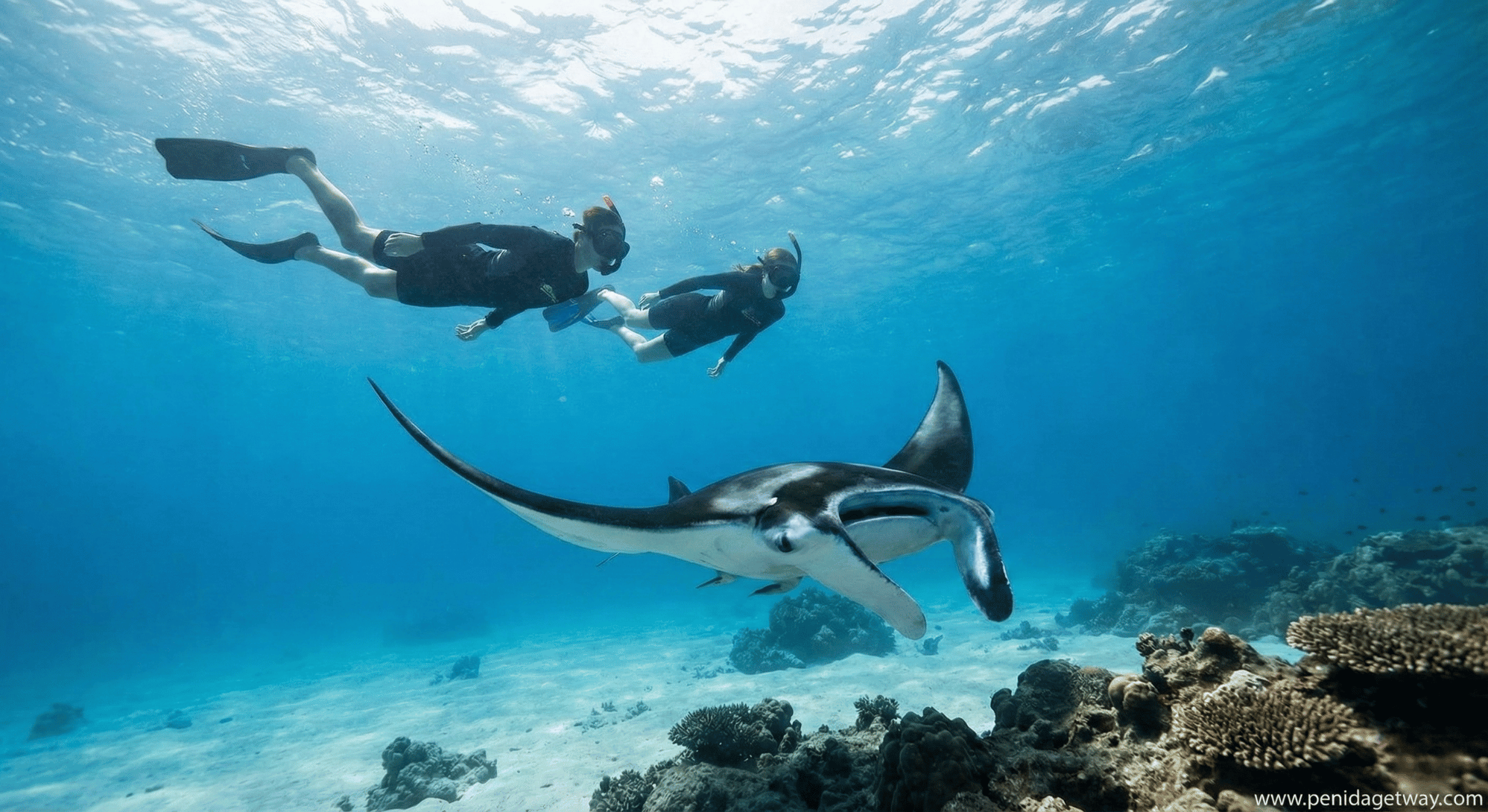
Imagine floating in the crystal-clear waters of the Indian Ocean, looking down, and seeing a massive shadow approaching. Suddenly, a majestic creature with a wingspan of up to 5 meters glides effortlessly beneath you, dancing in the currents.
This is Manta Ray Snorkeling Nusa Penida—the number one “bucket list” experience for travelers visiting Bali in 2026.
While Nusa Penida is famous for its cliffs (like Kelingking Beach), the real magic happens underwater. At Penida Getway, we specialize in taking you to the exact spots where these gentle giants live, ensuring a safe and unforgettable encounter.
Here is everything you need to know before you book your trip.
The Experience: Dancing with Gentle Giants
Reef Manta Rays are fascinating creatures. Unlike stingrays, Manta Rays do not have stingers and are completely harmless to humans. They are curious, intelligent, and often swim close to snorkelers.
The feeling of being in the water with them is indescribable. It is peaceful, humbling, and thrilling all at once. Whether you are a professional diver or a first-time snorkeler, seeing a Manta Ray in the wild is a memory you will keep forever.
Manta Point vs. Manta Bay: What is the Difference?
When booking a snorkeling trip, you will often hear two names: Manta Point and Manta Bay. Many tourists think they are the same, but they are very different locations.
1. Manta Point (The Cleaning Station)
Located on the southern coast of Nusa Penida, this is a deep-water limestone rock formation.
- What happens here: This is a “cleaning station.” Mantas come here to hover while small fish eat parasites off their skin.
- Visibility: Usually excellent (blue water).
- Conditions: The water can be choppy because it faces the open Indian Ocean.
2. Manta Bay (The Feeding Ground)
Located closer to Crystal Bay on the west side.
- What happens here: This is a shallow area where plankton is rich. Mantas come here to feed.
- Visibility: Can be slightly greener due to the plankton (which Mantas love!).
- Conditions: Generally calmer and easier to reach.
Which one do we visit? At Penida Getway, our experienced captains monitor the sea conditions daily. We will take you to the spot with the highest chance of seeing Mantas and the safest water conditions for that specific day.
The Best Time for Manta Ray Snorkeling Nusa Penida
Manta Rays are present in Nusa Penida year-round! However, timing your trip correctly can maximize your experience.
- Time of Day: Morning is best. We recommend starting your tour between 8:00 AM and 10:00 AM. The ocean is calmer, and the Mantas are usually most active during their morning feeding/cleaning routines.
- Season: The dry season (April to October) generally offers better visibility, but Mantas are wild animals and can be seen in the wet season too.
Pro Tip: If you are prone to seasickness, take a tablet 30 minutes before the boat departs. The ride to Manta Point can be adventurous!
Safety & Equipment: Why Book with Penida Getway?
Safety is our top priority. The ocean currents around Nusa Penida can be strong, which is why you should never snorkel alone without a boat or a guide.
When you book a Private Snorkeling Tour with Penida Getway, you get:
- Professional Guides: Our guides jump in the water with you. They know exactly where to look for Mantas and will help you if you get tired.
- Top-Quality Gear: We provide high-quality masks, snorkels, and fins.
- Life Jackets: Mandatory for safety and flotation, so you can relax and float while watching the Mantas.
- GoPro Documentation: Want cool underwater photos? Our guides are experts at capturing that perfect shot of you with a Manta Ray.
Maximize Your Day: The “Snorkel + Island” Combo
Since snorkeling usually takes about 2-3 hours in the morning, what should you do with the rest of your day?
Don’t waste your time going back to the hotel! We recommend our most profitable and popular package: The Snorkeling + West Trip Combo.
Itinerary Example:
- 08:00: Start Snorkeling Adventure (Manta Bay, Gamat Bay, Crystal Bay).
- 11:00: Shower and Lunch.
- 12:30: Visit Kelingking Beach (The T-Rex).
- 14:00: Visit Broken Beach & Angel’s Billabong.
- 16:30: Return to Harbor.
This way, you get the underwater magic and the famous cliff photos in a single day!
Ready to Jump In?
Don’t just dream about it—experience the magic of Manta Ray Snorkeling Nusa Penida yourself. Spots for our private boats fill up fast, especially during high season.
Secure your spot today with a trusted local operator.
👉 [Book Private Snorkeling + Island Tour via WhatsApp] Get the best price and instant confirmation at www.penidagetway.com
FAQ (Frequently Asked Questions)
Q: Can I swim with Mantas if I cannot swim well? A: Yes! You will wear a life jacket, and our guide will hold a floatation ring for you to hold onto. You just need to float and look down.
Q: Is it guaranteed to see Manta Rays? A: Manta Rays are wild animals in a vast ocean, so there is never a 100% guarantee. However, Nusa Penida has one of the highest sighting rates in the world (over 85% success rate on our tours).
Q: How much does Manta Ray snorkeling cost? A: Prices vary for shared vs. private boats. Check our website for the latest 2026 promo rates!